French Buttercream Macarons
French Buttercream Macarons
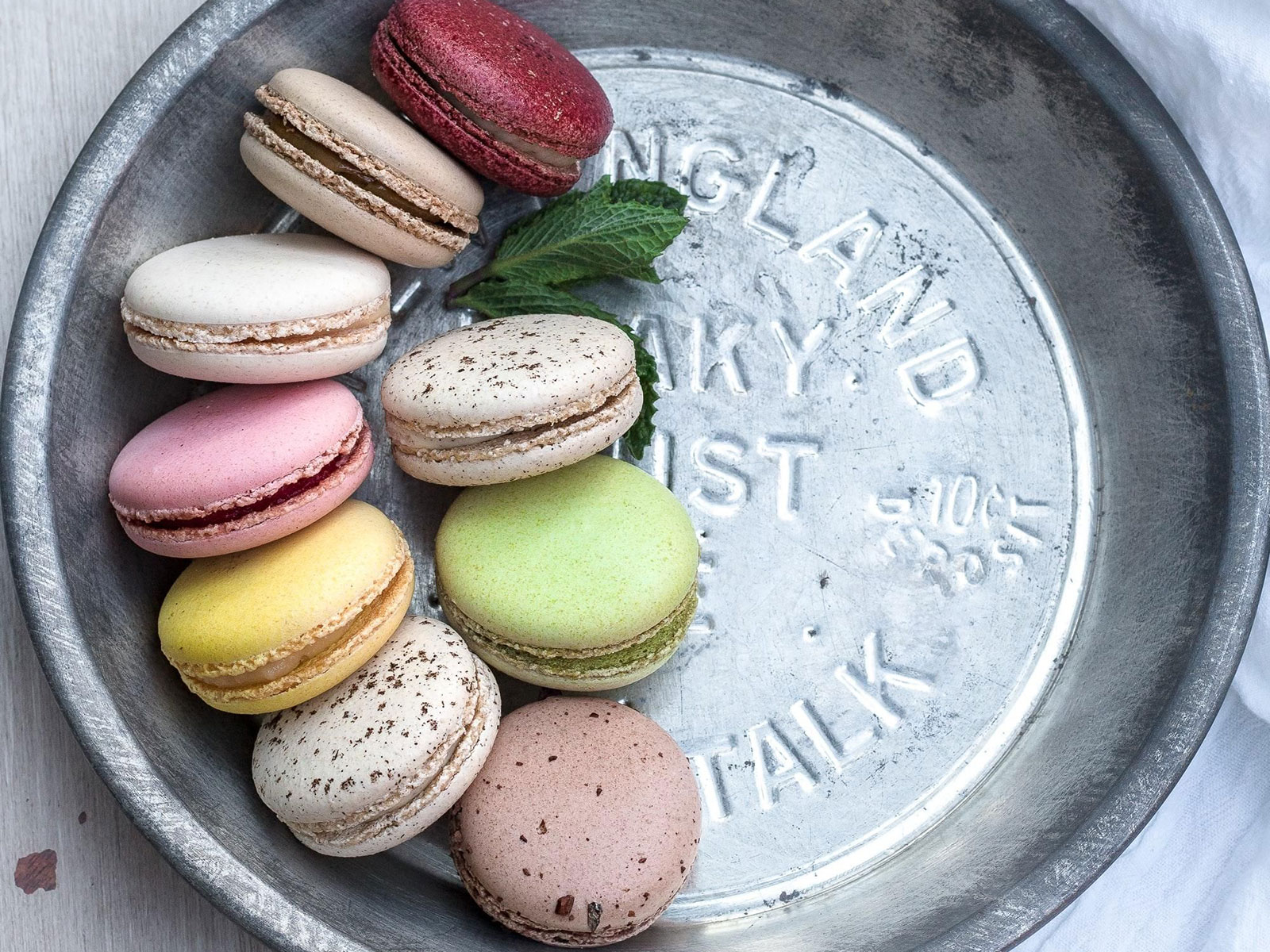
French macarons are tiny little divas, but they are teachable. These have crisp almond shells, tender centers, and a rich French buttercream-style filling. The trick is not magic. It is paying attention to the meringue, macaronage, resting time, oven temperature, and filling texture.
Recipe at a Glance
- Prep: 45 minutes
- Cook: 40 minutes
- Bake: About 20 minutes per batch
- Chill: Refrigerate assembled macarons before serving
- Rest: Let piped shells rest until the surface feels dry
- Total: 70 minutes in the existing recipe card, plus shell resting and chilling
- Servings: 10 servings
- Difficulty: Difficult
- Oven: 300°F convection
Exact Ingredients
The existing recipe card remains the source of truth for quantities. I have preserved its ingredient amounts rather than changing them. The card lists the following:
- Macaron shells: 1 3/4 cups confectioners’ sugar, 1 1/4 cups almond flour, 2/3 cup egg whites, 3 tablespoons granulated sugar, and 1 to 3 drops red or pink food coloring if desired.
- Buttercream filling: 2 cups confectioners’ sugar, 6 ounces raspberries, 1 teaspoon vanilla extract, 2 tablespoons coconut milk, 2 sticks salted butter softened, and 1 vanilla bean with the seeds scraped out.
The original recipe directions also refer to cream of tartar and salt during meringue preparation, but the existing ingredient card does not provide quantities for either. I have not invented measurements for them.
How to Make the Macaron Shells
Prepare the dry ingredients
- Heat the oven to 300°F using the convection setting. Line three baking sheets with silicone mats.
- Measure the confectioners’ sugar and almond flour from the recipe card and whisk them together.
- Sift the mixture into a large bowl. Work in batches and discard any coarse almond pieces that do not pass through the sieve.
Make the meringue
- Place the egg whites in a clean mixing bowl. The existing directions call for cream of tartar and salt at this stage, but the recipe card does not specify their quantities.
- Beat until the whites are frothy.
- Gradually add the granulated sugar while continuing to beat. Continue until the meringue is glossy and holds stiff peaks.
- Add the optional food coloring toward the end and mix only until the color is even.
Macaronage
- Fold the sifted almond-flour mixture into the meringue in stages.
- Use a spatula to fold from the bottom and around the bowl. The batter should become smooth and flow slowly from the spatula.
- Stop when a ribbon of batter settles back into the bowl. Overmixing can make the batter too loose.
Pipe and rest
- Transfer the batter to a piping bag and pipe evenly sized rounds onto the prepared sheets.
- Tap each sheet firmly against the counter to release large air bubbles. Pop any visible bubbles with a toothpick.
- Let the shells rest until the tops feel dry to a light touch. The exact resting time depends on humidity, so use the surface texture rather than an invented clock time.
Bake and cool
- Bake until the shells are shiny, set, and have developed feet around the bottoms. The existing recipe calls for about 20 minutes.
- Cool completely on a rack before peeling the shells from the mats.
How to Make and Use the Filling
- Prepare the French buttercream filling using the exact ingredients and quantities in the existing recipe card.
- Make sure the softened butter is pliable but not melted.
- Flavor the filling with the vanilla extract and vanilla bean seeds. The existing directions also allow raspberry flavoring and tinting.
- Pipe a thin layer of filling onto half of the cooled shells.
- Place the remaining shells on top and press gently until the filling reaches the edges without squeezing out.
Tips and Troubleshooting
- Cracked shells: The shells may need more resting time, or the oven may be running hot.
- No feet: Overmixed batter, insufficient resting, or oven-temperature problems can contribute.
- Pointed tops: The batter may be too stiff and need a little more folding.
- Hollow shells: Check the meringue, macaronage, baking time, and oven temperature. An oven thermometer can be useful.
- Curdled buttercream: Keep mixing before assuming it has failed. If it is too soft, a brief chill can help the emulsion firm up.
- Uneven sizes: Use a consistent piping motion and pipe onto a guide if needed.
Substitutions
- Food coloring is optional and can be omitted.
- The existing filling can be flavored with vanilla or raspberry according to the recipe card.
- Do not substitute almond flour with a different flour without expecting a significant change in shell structure.
Storage and Reheating
These are not a reheating dessert. Store filled macarons in an airtight container in the refrigerator. The original recipe recommends refrigerating before serving so the filling can mature the shell texture. For longer storage, freeze assembled macarons in an airtight container and thaw them in the refrigerator before bringing them toward room temperature.
Frequently Asked Questions
Why do macarons need to rest?
Resting allows the surface to form a skin. That surface helps the shells expand upward and develop feet instead of cracking across the top.
Do I really need a kitchen scale?
Strongly recommended. Macarons are much less forgiving of measurement differences than everyday cookies.
Why are my shells hollow?
Hollow centers can come from meringue stability, overmixing, underbaking, or uneven oven temperature. Work through one variable at a time.
Shop This Recipe
As an Amazon Associate we earn from qualifying purchases.
More Sweet Pea Baking
Browse Desserts for more baking projects, try Brown Butter Snickerdoodles for an easier cookie, or use What Should I Make? when you want help choosing your next bake. If you want another cake project, try Chocolate Spice Cake or Better Boxed Cake. If you want a classic cookie after a more technical bake, try The Perfect Chocolate Chip Cookie. For a richer cheesecake project, see Biscoff Cheesecake with Blueberry Syrup. For grocery planning, visit Recipes by Budget or the $50 Grocery Challenge.